
Why dental SEO is harder than other local SEO
Dental practices have one of the toughest SEO landscapes in Toronto. There are roughly 2,800 dental practices across the GTA competing for a finite pool of local search demand, and patients almost always search with treatment-specific intent — "Invisalign Yonge & Eglinton", "emergency dentist downtown Toronto", "family dentist Bayview Village" — meaning generic optimization for "dentist Toronto" leaves enormous demand on the table.
The practices that win in this market aren't the ones with the biggest marketing budgets. They're the ones that systematically claim Map Pack positions in 6–10 individual neighbourhoods, publish authoritative treatment-pillar content for every service on their menu, and run a disciplined post-appointment review workflow that respects RCDSO guidelines while still producing 8–12 fresh five-star reviews per month.
This guide is the complete playbook we use with our Toronto dental clients — the same one our cosmetic dentistry, Invisalign, and family practice clients use to compound new patient bookings month over month. If you'd rather skip the reading and get a practice-specific audit of where you stand right now, request one here and we'll send written findings within three business days.
The Toronto dental market in numbers
Context shapes strategy. Toronto's dental market is mature, competitive, and increasingly specialized. According to data from the Royal College of Dental Surgeons of Ontario and the Canadian Dental Association, the GTA contains roughly 2,800 active dental practices serving 6.4 million residents. Most patients now begin their search for a new dentist on Google rather than via referral.
Sources: RCDSO, Canadian Dental Association, Think with Google.
The math is straightforward. If a single new family-practice patient is worth C$3,200 in lifetime value, and your SEO retainer brings in 12 new patients per month, that's C$38,400 in monthly lifetime revenue at a fraction of the marketing spend. Specialty treatments — Invisalign, dental implants, full-mouth restoration — push the per-patient economics dramatically higher.
How Toronto patients actually search
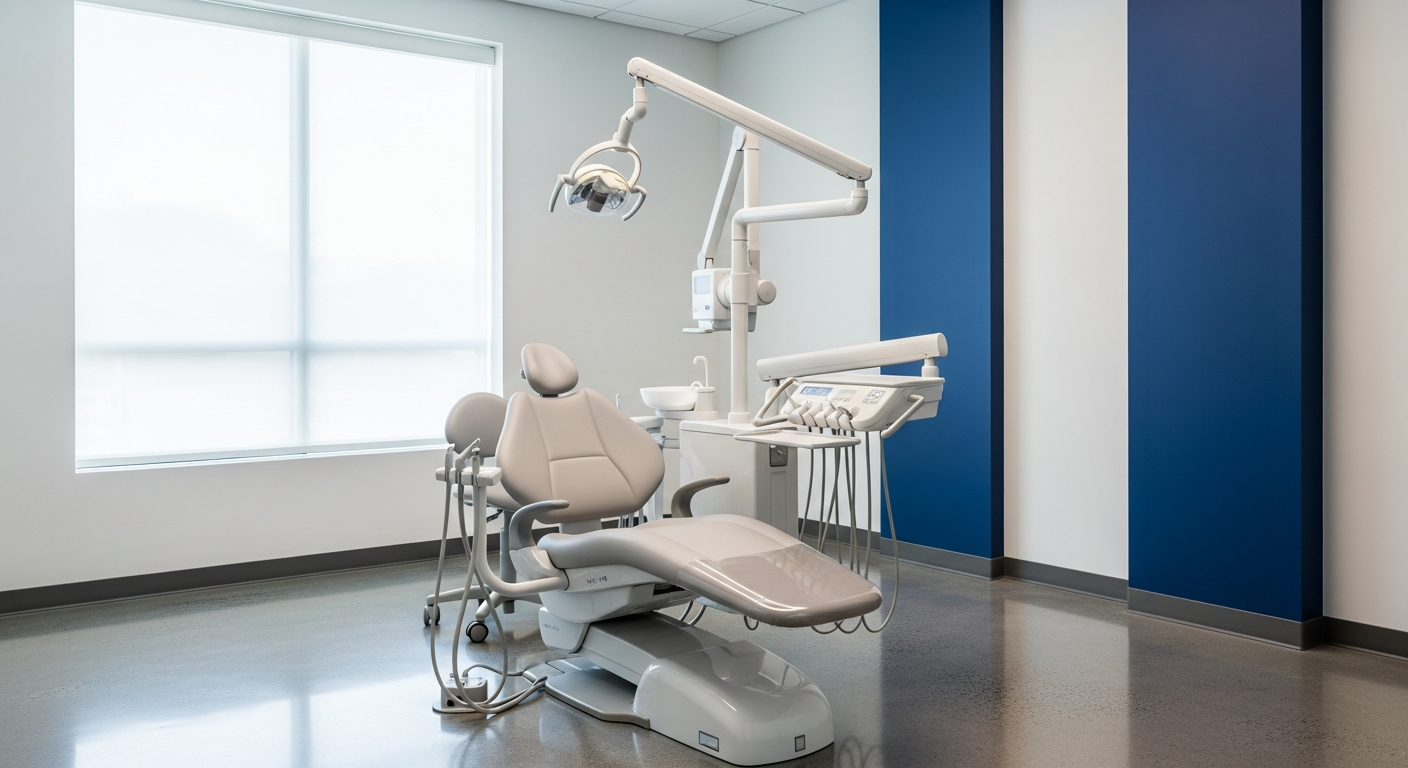
The single biggest mistake dental practices make is targeting "dentist Toronto" as their primary keyword. That term is competitive, has low conversion intent (it's used by job seekers, students, and people doing general research as much as by patients), and ignores the way real patients actually look for care. Real Toronto patients search with three modifiers stacked together:
- Treatment — Invisalign, dental implants, root canal, cosmetic veneers, pediatric dentistry, emergency dentist, sedation dentistry
- Neighbourhood or landmark — Yonge & Eglinton, North York, downtown Toronto, near Bayview Village, near Sunnybrook
- Intent qualifier — "near me", "best", "open now", "accepting new patients", "Saturday appointments", "Invisalign cost"
Optimizing only for the broad terms means you're invisible to the high-intent searches that actually convert. A treatment × neighbourhood content matrix — one well-written page for each high-value combination — is what separates dental practices that book 30+ new patients per month from practices that book 5.
Owning the Map Pack for 'dentist near me'
The Map Pack — the three businesses Google shows above the regular blue links — captures roughly 44% of all clicks on local commercial-intent searches. For dental practices, ranking in those three positions for "dentist near me" in your catchment area is the single highest-leverage win in the entire SEO playbook. This is where the largest chunk of dental SEO effort goes.
Every category, every treatment, every attribute (wheelchair accessible, accepting new patients, Sunday hours), every photo of the actual clinic — Google rewards profiles that look actively maintained.
8–12 fresh reviews per month from real recent patients, mentioning specific treatments and neighbourhood names — RCDSO-compliant, never incentivized.
Online booking surfaced directly from your Google Business Profile, so patients can book without leaving the search result. The single highest-impact conversion lever most practices ignore.
Our dedicated Google Business Profile optimization service is the foundation of every dental SEO engagement we run. We rebuild profiles from scratch in the first 30 days, then maintain them on a monthly cadence — most practices have never had this work done properly even once.
Treatment-specific content that converts
Patients researching a treatment — particularly higher-ticket treatments like Invisalign or implants — typically read 4–8 pages before booking a consultation. That research happens almost entirely on Google. The practice with the most authoritative, helpful, well-organized treatment content wins the consultation, often before the patient has even looked at competitors.
| Treatment | Avg. patient research depth | Where SEO content matters most |
|---|---|---|
| Invisalign | 6–10 pages over 2–4 weeks | Pricing transparency, before/after gallery, treatment timeline |
| Dental implants | 8–15 pages over 4–8 weeks | Procedure detail, recovery, financing, dentist credentials |
| Cosmetic veneers | 5–8 pages over 1–3 weeks | Portfolio, material options, longevity, smile design process |
| Emergency dentistry | 1–2 pages, immediate | Map Pack visibility, click-to-call, hours, location clarity |
| Pediatric dentistry | 3–5 pages over 1–2 weeks | Office environment, parent reviews, anxiety management |
| Sedation dentistry | 4–6 pages over 1–3 weeks | Safety credentials, sedation type explainers, patient stories |
For each treatment you actually offer, you should have one in-depth pillar page (1,500–2,500 words) that addresses every meaningful patient question, with supporting cluster content for related sub-topics. Done well, this approach lets a dental practice rank for hundreds of treatment-specific long-tail queries, each one bringing in a high-intent prospective patient.
Neighbourhood targeting for dental practices
Toronto patients almost never travel more than 15 minutes for routine dental care. That makes neighbourhood-level Map Pack visibility worth far more than city-wide rankings. We build dedicated neighbourhood landing pages for every catchment area you actually serve — typically 4–8 pages depending on practice location and travel patterns. Multi-location practices follow the same logic, scaled up. For practices working across the broader GTA, see our location pages for North York, Etobicoke, Mississauga, Markham, and Vaughan.
Reviews, RCDSO compliance, and trust signals

The Royal College of Dental Surgeons of Ontario sets clear advertising and testimonial standards Ontario dentists must follow. The most relevant for SEO purposes: you can't offer incentives in exchange for reviews, you can't selectively publish only positive testimonials on your own website, and you can't author or edit reviews on a patient's behalf. What you can do — and should be doing systematically — is make it easy and timely for happy patients to leave honest, unprompted reviews on Google, Yelp, and major dental directories.
Our standard review workflow runs at the front desk: a tablet at checkout with a one-tap link to your Google review form, plus an automated SMS follow-up the same evening from the practice management system. Practices that implement this disciplined cadence average 8–12 new reviews per month within 90 days of launch, with an average rating that holds at 4.8–4.9 stars.
Technical SEO for dental websites
A dental practice with the best content strategy in the GTA will still fail if the underlying website is slow, badly structured, or missing schema. Google's Core Web Vitals are now ranking factors and the bar rises every year.
- Mobile load under 2.5 seconds on 4GMost dental searches happen on mobile, often from bus stops, kitchens, and waiting rooms. Slow mobile load is the single most common dental SEO failure we encounter.
- MedicalProcedure and Dentist schemaEach treatment page marked up with the appropriate schema, dentist credentials surfaced via Physician schema, AggregateRating tied to your real Google reviews.
- Online booking integrationBooking widget integrated at the page level, not buried in a separate sub-page. Reduces friction by an order of magnitude.
- Click-to-call optimizationA persistent, thumb-friendly call button on mobile. Most dental leads start as phone calls — and most dental sites bury the number in the footer.
- Indexable, crawlable, fastrobots.txt, sitemap.xml, internal linking depth, HTTPS — all working in concert. Standard scope on every engagement we run.
If your existing site can't hit these marks, the most cost-effective path forward is usually a fresh build rather than patching the old one. Our web design service includes online-booking integration, dental schema, and Core Web Vitals in the green from launch day.
Metrics that move new patient bookings
Rankings are an input. The metrics that matter to a Toronto dental practice are new patient bookings, treatment-plan acceptance rates, and patient lifetime value — and our reporting is built around them. Every monthly report includes:
- Map Pack and organic ranking movement on every priority treatment × neighbourhood combination
- Total Google Business Profile interactions — calls, direction requests, website clicks, booking clicks
- New patient form fills and call-tracking attribution from organic search
- Booking-to-show rate and treatment-plan acceptance by source (where your practice management system supports the integration)
- Review velocity and average rating across Google, Yelp, and dental directories
- Technical health (Core Web Vitals, indexability, schema validity)
- Competitive benchmarking against your top three Toronto rivals
We added 31 new patients in our first 60 days with Toronto SEO — more than our previous agency delivered in 9 months. The Map Pack work alone changed the practice.
Ready to see what your practice could look like? Request a free dental SEO audit, browse our transparent pricing, or read more about our approach.
Dental SEO FAQ
The questions Toronto dentists ask us most often before signing on.